Google dominates the worldwide web browser market.
In Vietnam, 25 million Vietnamese people and foreigners are learning the local language using the CocCoc browser (Cốc Cốc) monthly.
Download the Cốc Cốc browser on:
- Windows.
- MAC OS.
- iOS.
- Android.
By visiting Cốc Cốc’s website homepage.
Cốc Cốc Browser: The Vietnamese Google
Launched in 2013, Cốc Cốc is a free Vietnamese web browser available on desktop and mobile devices.
Its original 2012 name was Cờ Rôm+ (Vietnamese pronunciation of “Chrome Plus”). However, it quickly changed to Cốc Cốc (meaning “Knock Knock”).
Like Microsoft Edge and Opera, Cốc Cốc uses the Chromium open-source code.
Its search engine, available in both English and Vietnamese, competes with Google in the local market. It is the second-most-popular browser in Vietnam, with an 18% market share.
The primary objective of Cốc Cốc was to introduce built-in local functions that would meet Vietnamese expectations. Here is a list of Cốc Cốc browser-specific features:
- Minimalist interface.
- Fast content download.
- Cross-device file transfer.
- Powerful ad blocker.
- Automatic spell checker.
- Currency converter.
- Reliable Vietnamese translator.
We will detail the main functionalities of this Vietnamese browser below.

Cốc Cốc Development & Growth
Back in 2013, Cốc Cốc’s interface looked close to that of Google Chrome.
Cốc Cốc differentiates itself thanks to its multiple-stream file download function and media content storage.
In a matter of months, it gained more users than other popular browsers, such as Safari and Internet Explorer.
Since its release, Cốc Cốc has bypassed all blocked website functions thanks to its reverse domain name resolution. However, it faced compatibility issues with Google services and with access to its website network.
For example, Cốc Cốc users could not log in to their Gmail accounts. Google was sending messages like “Change your browser to Chrome” or “Please update your browser.”
To solve those problems, Cốc Cốc announced in September 2021 a complete switch to Google Chrome’s User Agent (UA) on desktop and mobile platforms. From then on, Google recognized the Cốc Cốc browser because the UA string information became correct.
Cốc Cốc integrated the ad blockers directly into its browser. There is no need to install third-party software or utilities. This saves battery and space, allowing better performance.
In 2020, Cốc Cốc partnered with the creator of AdBlockPlus to implement an ad, malware, and tracker filtering feature.

Besides, Cốc Cốc cooperates with Yandex, the top Russian browser. Together, they developed Newtab 4.0. It is an Artificial Intelligence (AI) that automatically suggests content based on a user’s browsing behavior and past interactions.
Newtab 4.0 ensures people always look at a suitable newsfeed of articles, videos, and images. Cốc Cốc reports that this technology increases time spent in the browser by 10%.
Cốc Cốc User Profile
The majority of Cốc Cốc users are Vietnamese citizens. As Vietnam’s median age is around 31, the browser’s users are young.
According to Cốc Cốc, the user age ratio on their digital product is:
- 7% of 0-17-year-olds
- 21% of 18-24-year-olds
- 35% of 25-34-year-olds
- 16% of 35-44-year-olds
- 8% of 45-54-year-olds
- 13% of 55+ years old
Most of them live in Hanoi or Ho Chi Minh City, where they are about 10 times as numerous as anywhere else.
Moreover, Cốc Cốc users spend an average of 2.5 hours per day on desktop, and 1.5 hours on mobile.
Cốc Cốc vs Google Chrome
Cốc Cốc’s team built their browser as a Vietnamese version of Google Chrome.
Many locals proudly claim that “Cốc Cốc is 95% similar to Google’s product.” In reality, many features differentiate them. We list the most important functions below.

Around 70% of internet users use Google. The Google Chrome web browser benefits from:
- A simple and intuitive interface.
- High-loading speed.
- Constant browser updates and free plugins.
- Cross-device synchronization.
- Lots of valuable and free digital tools.
On the downside, Google Chrome consumes high CPU usage, which can sometimes cause devices to slow down or freeze on low-end configurations. Besides, this browser is not as optimized for the Vietnamese market as its local competitor.
On the other hand, Cốc Cốc integrates most of Google Chrome’s basic features. Since this web browser is dedicated to Vietnamese users, it emphasizes features suited to the local market. Here is a detailed list of Cốc Cốc browser features:
- English-Vietnamese Dictionary and integrated punctuation.
- Optimized search function for locals.
- Built-in proxy to log in to Facebook.
- Local Domain Name System.
- Media download and resume without software support.
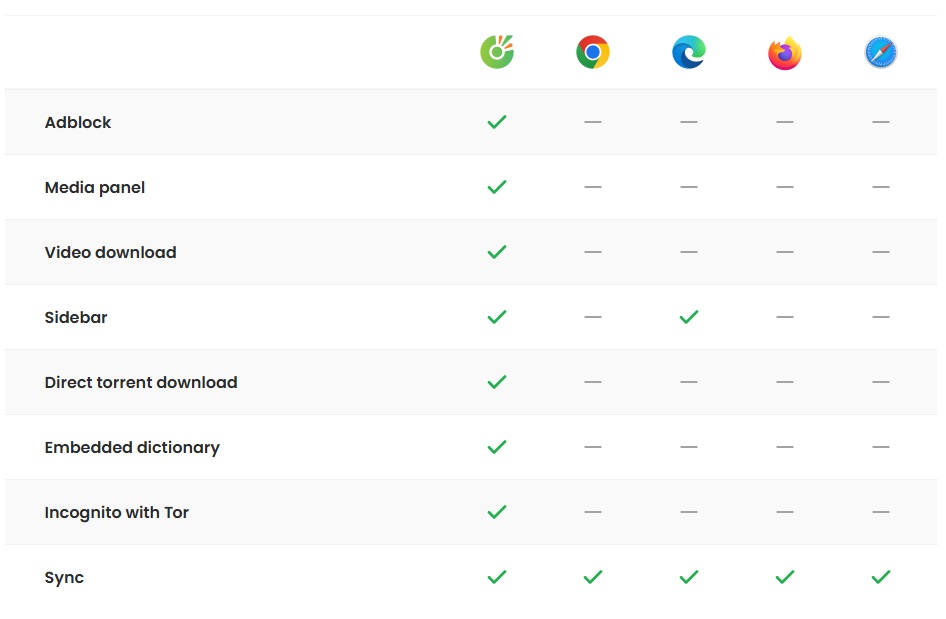
Cốc Cốc answers the desires and habits of the Vietnamese people. For example, locals love to have videos on their mobile devices. Cốc Cốc is more convenient than Google Chrome for downloading a full movie quickly.
Cốc Cốc works better than Google Chrome on low-end devices, which is extremely convenient for the local population. Overall, the Vietnamese browser remains slightly slower than Google Chrome.
Both got involved in various disputes regarding the use of personal information. Cốc Cốc has a reputation for disclosing user data, and we recommend never sharing any private content in this browser.
Cốc Cốc Ads
Advertisers with experience running campaigns on Google Ads won’t be lost with Cốc Cốc Ads. The settings are similar. As for the browser features, the main difference is that Cốc Cốc ads focus more precisely on local markets.

Cốc Cốc ads cover the top and bottom of the sales funnel. Here are the best Cốc Cốc ad formats depending on the funnel level:
- Top (brand awareness): browser skin, center banner, sidebar icons.
- Middle (consideration): search text ads and search banners.
- Bottom (sales): dynamic search, shopping ads.
To make proper Key Performance Indicator (KPI) and metrics estimations, advertisers should expect the following Click-Through Rates (CTRs) for each Cốc Cốc ad format:
- Browser skin: 0.8-1.2%.
- Custom skin: 1-1.5%.
- Masthead: 0.3-1%.
- Center banner: 0.3-1%.
- Video banner: 0.3-1%.
- Dynamic search: 0.7-1.5%.
- Shopping: 5-8%.
- Search text: 3-6%.
- In-search banner: 0.05-0.12%.
Note that the Masthead top banner ad format has a fixed Cost Per Mille (CPM) of 27,500 VND, with a minimum order of 1,000.
Cốc Cốc also offers native ad text and banners that tend to look less “aggressive” than classic ads. They are more likely to catch the attention of online users when browsing the Cốc Cốc platform.
Cốc Cốc Against Google
Cốc Cốc’s browser is designed for the Vietnamese audience.
Like Zalo is the Vietnamese version of Facebook, Cốc Cốc is a local version of Google Chrome that is better suited to the population, thanks to its specific features.
Vietnamese people are extremely patriotic and prefer national products. Therefore, Cốc Cốc is successful in this country.
People love Cốc Cốc because it is the best English-Vietnamese translator available in the market. It is much more accurate than Google Translate as it includes Vietnamese slang.
The targeting options for Cốc Cốc ads are also more precise than those for any other digital advertising tool. Businesses can even reach their audiences in the countryside.
The Vietnamese browser is the first choice for downloading online content, music, documents, and especially large files like videos. Besides, it is easy to transfer them from a computer to a smartphone.
Google remains dominant, but no one can contest Cốc Cốc’s growth in Vietnam. Now, the question remains open: will it face issues later regarding video downloads and copyright matters?